
Shalby Hospital, Mohali
Dr. Rahul Sandhu — Surgical Oncology
General Surgery & Hernia Care • Non-Mesh Tissue Repair

Desarda Mesh-Free Inguinal Hernia Repair in Mohali

Desarda repair is an open, mesh-free technique used to repair selected inguinal hernias using the patient's own tissue. Learn how the procedure works, who may be suitable, and how it compares with other hernia repair options.

Call +91 98889 70519
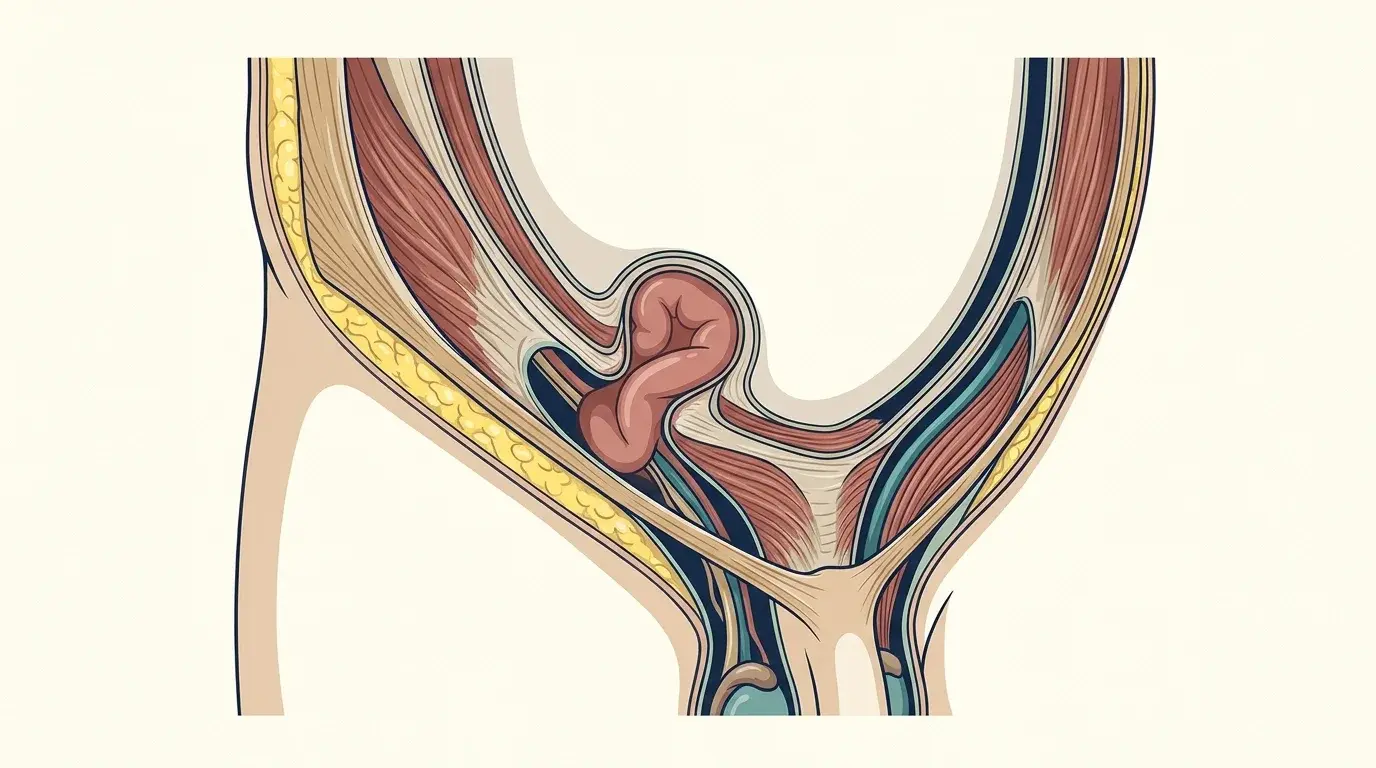
Clinically accurate medical illustration of inguinal hernia anatomy showing the inguinal canal, external oblique aponeurosis, and groin structures
Medical Illustration: Inguinal Canal & Abdominal Wall Anatomy
Clinical Assessment & Service Verification Notice

This educational guide is provided to explain the anatomical and physiological principles of Desarda mesh-free hernia repair. Clinical indications, surgical technique selection, and procedural availability depend on an in-person surgical assessment and individual clinical evaluation.

What Is an Inguinal Hernia?

An inguinal hernia occurs when internal tissue—such as intra-abdominal fat or a portion of the intestine—pushes through a localized area of weakness in the lower abdominal muscles into the inguinal canal. The inguinal canal is a natural passage in the groin area.

Inguinal hernias generally fall into two anatomical categories:

  • Indirect Inguinal Hernia: Often related to a congenital opening at the internal inguinal ring that did not fully close before birth, allowing abdominal contents to follow the path of the spermatic cord.
  • Direct Inguinal Hernia: Typically develops over time as abdominal wall muscles weaken through age, persistent physical strain, chronic coughing, or heavy lifting, creating a bulge directly through the floor of the inguinal canal.

Patients typically notice a soft bulge in the groin that may become more noticeable when standing, coughing, or exercising. A clinical physical examination by a surgeon is the primary method for diagnosing an inguinal hernia. Imaging, such as an ultrasound, is used when clinically indicated to evaluate ambiguous cases or confirm anatomical details.

What Is Desarda Mesh-Free Hernia Repair?

The Desarda repair is an open, tissue-based surgical technique described by Indian surgeon Dr. M. P. Desarda in 2001. It was developed to repair inguinal hernias without relying on synthetic prosthetic mesh implants or generating excessive tension across the repair.

In this technique, the surgeon mobilizes an undetached strip of the patient's own external oblique aponeurosis (a fibrous layer of the abdominal wall). Because the strip remains attached to surrounding tissue, it retains its natural vascularity and biological viability. The strip is positioned across the floor of the inguinal canal to reinforce the weakened posterior wall.

Because the repair uses solely the patient's natural tissue, it is completely mesh-free, avoiding the placement of permanent synthetic biomaterials (such as polypropylene mesh).

How Does the Desarda Technique Work?

The core concept of the Desarda technique is physiological reinforcement. Rather than introducing a static artificial screen, the surgery repositions living muscle fascia to shield the hernia opening:

  1. Surgical Access & Hernia Sac Reduction: Through a standard open incision in the groin, the hernia sac is isolated and returned to its proper intra-abdominal position.
  2. Aponeurotic Strip Mobilization: A strip of the external oblique aponeurosis (typically 1.5–2 cm wide) is demarcated while keeping its medial and lateral attachments intact to preserve blood flow.
  3. Reconstruction of the Canal Floor: The strip is sutured to the inguinal ligament below and to the conjoined muscle arch above, creating a tension-free tissue barrier over the canal floor.
  4. Physiological Function: When the patient contracts the abdominal muscles (for instance, during walking or coughing), the external oblique muscle contracts synchronously, tightening the strip to support the canal when abdominal pressure rises.
  5. Anatomical Closure: The spermatic cord is repositioned, and the remaining tissue layers and skin are closed.
Lt Col (Dr) Rahul Sandhu

Lt Col (Dr) Rahul Sandhu

Senior Consultant & Surgeon

M.S. General Surgery (AFMC Pune) • DNB General Surgery • Former Head of General Surgery & Emergency Trauma (MH Panagarh).

Call +91 98889 70519
Shalby Hospital, Phase 9, Sector 63, SAS Nagar, Mohali
Mon – Sat: 9:00 AM – 5:00 PM
Hernia Assessment Checklist
  • Physical clinical examination in standing and supine positions
  • Ultrasound imaging requested only when clinically necessary
  • Individual discussion of mesh vs. non-mesh suitability

Possible Benefits of Mesh-Free Hernia Repair

In selected clinical scenarios, pure tissue non-mesh repair provides important clinical considerations:

No Foreign Body Implantation

Completely avoids synthetic prosthetic mesh, eliminating implant-specific concerns such as mesh contraction, migration, or foreign-material reaction.

Living Autologous Tissue

Utilizes living tissue that maintains its blood supply, allowing natural integration and biological remodeling.

Patient-Specific Indication

Provides an option for patients with documented sensitivity to synthetic polymers or an informed preference to avoid artificial implants.

Potentially Contaminated Fields

May be considered in emergency or clean-contaminated operative situations where implanting permanent synthetic mesh poses higher infection risks.

*Note: These potential benefits depend on appropriate patient selection and tissue quality. Non-mesh repair is not universally superior for every patient or every hernia presentation.

Desarda Repair vs. Mesh-Based Hernia Repair: Evidence-Based Comparison

When choosing a surgical approach, it is essential to review current evidence and international clinical guidelines. According to the 2023 Update of the International HerniaSurge Guidelines for Groin Hernia Management:

  • Mesh-based repair (including open Lichtenstein and minimally invasive laparo-endoscopic TAPP/TEP) remains the primary recommended standard of care for most adult inguinal hernias worldwide because of reproducible, benchmarked low recurrence rates.
  • Non-mesh tissue repair may be considered in carefully selected patients following shared clinical decision-making, particularly when patients wish to avoid foreign material or have contraindications to mesh.
  • Among non-mesh methods, the Shouldice technique remains the guideline-preferred non-mesh repair with the strongest comparative evidence.
  • The Desarda technique has demonstrated promising short-term results in specialized centers, but international consensus notes that high-quality, long-term multicenter data remain insufficient to recommend generalized global adoption over standard mesh repairs.
Clinical FactorDesarda Non-Mesh RepairStandard Mesh Repair (Lichtenstein / Laparoscopic)
Repair ApproachOpen anterior groin incisionOpen anterior (Lichtenstein) or Keyhole (Laparoscopic TAPP/TEP)
Use of Prosthetic MeshNone (Uses patient's own aponeurosis)Synthetic mesh implant (typically polypropylene)
Patient SelectionStrict selection: requires strong, healthy external oblique aponeurosisBroad eligibility: bridges defect regardless of local tissue strength
Foreign Body AwarenessNo synthetic implant; no mesh-specific foreign body reactionPermanent synthetic material; minor risk of foreign-body sensation in some patients
Evidence BasePromising randomized and cohort trials; limited long-term multicenter registry dataExtensively documented worldwide in population registries and randomized trials
Surgeon ExpertiseRequires specific familiarity with aponeurotic transposition techniqueStandard surgical training worldwide with high reproducibility
Guideline Position (HerniaSurge 2023)Recognized tissue option; Shouldice is the guideline-preferred non-mesh repairPrimary recommended standard of care for most adult groin hernias

Who May Be Suitable for Desarda Repair?

Patient selection is fundamental to achieving good surgical outcomes with any pure tissue repair:

Patients Who May Be Considered
  • Primary, uncomplicated unilateral inguinal hernias
  • Patients with robust, healthy external oblique aponeurotic tissue
  • Younger or active individuals seeking to avoid synthetic implants
  • Patients with verified hypersensitivity or aversion to foreign prosthetic mesh
  • Clean-contaminated operative settings where mesh introduction is contraindicated
Clinical Limitations & Relative Contraindications
  • Thinned, split, or weakened aponeurotic tissue that cannot provide structural support
  • Recurrent hernias with significant scarring from prior interventions
  • Very large or complex inguinoscrotal hernias with severe floor destruction
  • Systemic connective tissue disorders predisposing to poor tissue healing
  • Cases where bilateral laparoscopic repair is clinically favored

Risks and Potential Complications

All surgical procedures carry known risks. While a mesh-free repair avoids mesh-specific foreign body complications, patients should be informed about general surgical and tissue-repair risks:

  • Hernia Recurrence: Recurrence can occur after any hernia surgery if tissue healing is compromised or excessive early abdominal pressure strains the repair.
  • Postoperative Pain: Localized incisional discomfort is normal in early recovery and managed with standard analgesics. Sensory nerve irritation in the groin may occasionally cause temporary numbness or burning sensation.
  • Seroma and Hematoma: Minor fluid accumulation or localized bruising in the subcutaneous space, which typically resolves on its own.
  • Superficial Wound Infection: Minor surgical site infection, addressed with standard wound hygiene and antibiotics if needed.
  • Urinary Retention: Transient difficulty passing urine following spinal or general anesthesia, usually resolving within 24 hours.

Recovery and Aftercare Expectations

Recovery after inguinal hernia surgery is individualized. While general milestones provide a helpful guideline, specific advice and restrictions should always be guided by the operating surgeon:

1
Immediate Postoperative Period (Day 1)

Most patients are managed as day-case or short overnight admissions. Gentle walking is encouraged within hours of surgery to promote circulation.

2
Early Weeks (Weeks 1–2)

Light household activities and desk work can typically be resumed as comfort allows. Straining and lifting heavy weights should be avoided.

3
Intermediate Phase (Weeks 3–4)

Gradual increase in physical activity and walking distance. Incisional firmness gradually softens as biological remodeling progresses.

4
Full Activity Resumption (Weeks 4–6)

Return to vigorous sports, gym workouts, or heavy lifting should be guided by follow-up clinical examination confirming solid wall stability.

When Should You Seek Urgent Medical Attention?

An untreated inguinal hernia can occasionally become incarcerated (irreducible) or strangulated (blood supply compromised). Seek immediate emergency medical attention if you experience:

  • A sudden, painful, firm groin swelling that cannot be pushed back in while lying flat.
  • Severe abdominal pain accompanied by nausea, vomiting, or abdominal distension.
  • Inability to pass stool or flatus (signs of acute bowel obstruction).
  • Skin over the swelling turning red, purple, or dark.
  • High fever or systemic chills.

Consultation and Treatment Planning in Mohali

Comprehensive clinical assessment and hernia evaluation are conducted at Shalby Hospital, Mohali (Sector 63, SAS Nagar). During an evaluation:

  • A thorough physical examination is performed to assess the hernia type, size, and reducibility
  • An ultrasound or diagnostic imaging is ordered if anatomical confirmation is needed
  • Both mesh and non-mesh surgical options are discussed openly with the patient
  • General health status and pre-anesthetic requirements are reviewed
Call +91 98889 70519

Frequently Asked Questions

What is Desarda mesh-free inguinal hernia repair?

Desarda repair is an open, tissue-based surgical procedure that reinforces the posterior wall of the inguinal canal using an undetached strip of the patient's own external oblique aponeurosis, without implanting synthetic prosthetic mesh.

Does Desarda repair use surgical mesh?

No. The Desarda technique is entirely mesh-free. It uses the patient's own living aponeurotic tissue to reconstruct the floor of the inguinal canal.

Is Desarda surgery suitable for every patient?

No. Candidacy depends on tissue quality, hernia type, body habitus, and overall health. Patients with thinned aponeurotic tissue, multiple recurrent hernias, or large defects are generally better candidates for standard mesh-based repair.

What is the difference between Desarda and laparoscopic mesh repair?

Desarda is an open anterior procedure utilizing the patient's natural tissue without any foreign implant. Laparoscopic repair (TAPP or TEP) is a minimally invasive keyhole approach that positions a synthetic mesh behind the abdominal wall in the preperitoneal space.

Can a hernia recur after Desarda repair?

Yes. Hernia recurrence is a recognized risk of any hernia repair technique, including non-mesh tissue repairs. Recurrence risk depends on tissue strength, surgical technique, and patient healing factors.

How long does recovery take?

Recovery timelines vary by individual. Most patients begin gentle walking within 12–24 hours and resume light sedentary routines within 1–2 weeks. Strenuous exercise and heavy lifting are usually restricted for 4–6 weeks as advised by the surgeon.

What are the potential complications?

Potential surgical complications include wound bruising (hematoma), fluid collection (seroma), superficial wound infection, postoperative discomfort or temporary nerve irritation, urinary retention, and hernia recurrence.

How is the appropriate hernia repair technique selected?

The surgical approach is determined through a clinical physical examination, assessment of tissue quality, imaging when indicated, and shared decision-making discussing both mesh and non-mesh alternatives.

Where can I discuss inguinal hernia treatment in Mohali?

Clinical consultations and surgical assessments are conducted at Shalby Hospital, Phase 9, Sector 63, SAS Nagar, Mohali, Punjab.

Medical References & Clinical Evidence
  • van Veenendaal N, Simons M, Hope R, et al. Update of the international HerniaSurge guidelines for groin hernia management. Hernia. 2023;27(6):1429–1446. PubMed Central Article
  • The HerniaSurge Group. International guidelines for groin hernia management. Hernia. 2018;22(1):1–165. Journal Link
  • Desarda MP. New method of inguinal hernia repair: a new physiological repair. ANZ Journal of Surgery. 2001;71(4):241–244.
  • Ge H, Liang C, Xu Y, Ren S, Ling K. Desarda versus Lichtenstein technique for the treatment of inguinal hernia: a systematic review and meta-analysis. The Surgeon. 2014;12(3):122–130.
  • Manyilirah W, Kituuka O, Kiryabwire J. A randomized clinical trial of Desarda versus Lichtenstein technique for inguinal hernia repair. World Journal of Surgery. 2012;36(10):2362–2368.
Explore Clinical Procedures

Other Surgical Treatments

View All Treatments

Schedule Your Inguinal Hernia Consultation in Mohali

Discuss your symptoms, clinical examination findings, and personalized repair options with Lt Col (Dr) Rahul Sandhu at Shalby Hospital, Mohali.

Call
WhatsApp
Location